P—15 / ZERO-G PARTY

Music video montage prompt for MiniMax H3

Eleven shots in ten seconds, held together by four colours and one lens.

A vertical montage of a party on an orbital station. It has no story, no dialogue and no timecodes — eleven shots in ten seconds, sequenced by commas. What stops it collapsing into noise is that every shot is shot on the same lens, graded to the same four colours, and lit from the same direction.

Steps
2 steps
Mode
Reference to Video
Duration
10s
Ratio
9:16
Resolution
2K
Audio
Music bed, no dialogue
Cost
$1.30

Reference render — not generated on this site. Source: youmind

Output reference

A woman beside a zero-gravity pool in an orbital lounge with Earth through the windowVideo
The clip
1085 / 7000

Images 0/9 · Clips 0/3 · Audio 0/3 · 12 files max

No card, no account: watch and download 12 real MiniMax H3 clips, and run one prompt of your own on Agnes Video V2.0 — 16:9, watermarked, once. After that, sign in free for 3 clips a day on the free engine. MiniMax H3 on your own prompt starts at $24.9 a month.

1 FREE CLIP · WATERMARKED

02 — Inside

Two prompts, one workflow

Each step is the result beside the text that produced it. Copy either prompt into the console above.

Step 01the stillAny image model
1,174 chars

The style plate

A single frame carrying the palette, the lens character and the finish. It is a look reference, not a scene the video has to reproduce.

Cinematic still, vertical 1:2, shot on a 35mm lens at a shallow stop.

SUBJECT:
An elegant woman with long braided hair and luminous freckles reclines at the edge of an iridescent zero-gravity pool aboard a luxury orbital lounge. She wears a translucent shimmering wrap. Three-quarter view, relaxed, half-lit.

SET:
Behind her, an enormous curved window fills the upper frame with the limb of Earth glowing blue-white. Chrome and smoked-glass surfaces, luminous arches overhead, a slick of water lifting off the pool surface in slow beads.

LIGHT AND GRADE:
Deep blue and violet key from the left, magenta rim from behind, a soft pink bounce off the water. Blue-purple-pink grade with almost no warm tone anywhere in frame. Dreamy anamorphic-style lens flare across the upper third, shallow depth of field, creamy specular bokeh.

TEXTURE:
Glossy skin, sparkling fabric, rippling liquid, reflective chrome — four distinct material responses in one frame.

RENDER:
Photorealistic, highly detailed, high dynamic range, subtle film grain.

RESTRICTIONS:
No text, no logo, no watermark, no visible spacecraft branding, no warm orange tones, no daylight, no second focal subject.

Paste it into whichever image model you already use. We do not run one here yet — when we do, this button generates instead.

Reference output, step 02

A woman beside a zero-gravity pool in an orbital lounge with Earth through the windowVideo
The clip
Step 02the clipMiniMax H3 · Reference to video
1,085 chars

The montage

One paragraph, eleven shots, no timecodes. The lens and the grade are named at the start and at the end.

10 second cinematic futuristic spaceship party montage shot on a 35mm lens in vertical 1:2. An elegant woman with braided hair and luminous freckles lounges beside an iridescent zero-gravity pool, wearing a translucent shimmering outfit beneath deep blue and violet light. Quick cuts to stylish otherworldly ethereal guests dancing inside a luxurious orbital lounge as Earth glows through enormous curved windows. A futuristic DJ performs on holographic decks while neon projections pulse with the music. Macro close-ups of crystalline cocktails pouring over floating ice, glossy skin, sparkling fabric, rippling liquid and reflective chrome surfaces. Guests laugh beneath luminous arches as robotic servers carry glowing drinks. The camera sweeps past the party toward the planet outside, ending on an intimate close-up of the woman's hypnotic violet-blue eyes. Dynamic tracking shots, shallow depth of field, blue-purple-pink colour grading, dreamy lens flares, sensual high-energy music video atmosphere, photorealistic, highly detailed, 8K. Reference images are attached for style.

4 levers

Make it yours

What is safe to change. Most libraries publish only this list, which is why so many copied prompts come back worse than the original.

  1. 01

    The palette

    Blue, purple, pink and nothing else. Named twice — once inside the opening description and once in the closing grade list. A montage with no narrative is held together by colour, and three colours is about the limit before it stops reading as one film.

  2. 02

    The lens

    35mm, shallow depth of field, dreamy flares. Stating a focal length once at the top makes eleven unrelated shots feel like they came from the same camera, which is the cheapest continuity you can buy.

  3. 03

    The bookend

    It opens on the woman and ends on a close-up of her eyes. Nine shots of unrelated party footage sit between two shots of the same person, which is what turns a montage into a piece.

  4. 04

    The material list

    Glossy skin, sparkling fabric, rippling liquid, reflective chrome. Four surfaces that each respond to light differently, named together, which is how the macro block gets its variety without changing the palette.

Three ways to break it

  • Adding timecodes

    Eleven shots in ten seconds averages under a second each. A schedule that precise cannot be met and cannot be corrected — the model will hit the numbers by truncating shots mid-motion. Comma-sequenced montage is one of the few cases where letting the model distribute time is strictly better.

  • Adding a warm light source

    The grade is entirely cool, and it is the only thing holding eleven unrelated shots together. One warm practical in one shot and that shot reads as a different film.

  • Adding dialogue

    There is no lip-sync budget left. The model is already solving eleven shots, a moving camera and four material types in ten seconds, and a spoken line comes out of the shot count.

What it does

What the zero-g party template does

Two templates in this library take opposite positions on the same question, and it is worth reading them together. The ten-cut popcorn commercial schedules every cut to a hundredth of a second. This one schedules nothing at all — eleven shots separated by commas in a single paragraph.

The reason the loose approach is right here is arithmetic. Eleven shots across ten seconds is under a second each, and at that density there is no meaningful difference between 0.8 and 0.9 seconds — but there is a large difference between a shot that completes its motion and one that gets cut off. Hand the model a precise schedule at this density and it will meet it by truncating, because meeting the numbers is the more literal instruction. Let it distribute the time and it will give the sweeping camera move the second and a half it needs and take that back from a macro shot of ice, which is the trade you would have made.

What replaces the schedule is a set of global constraints, and there are exactly three. A focal length: 35mm, stated once at the top. A grade: blue, purple and pink, stated twice — once woven into the opening description and once in the technical list at the end. And a depth of field: shallow, also stated twice. Nothing else is consistent across the eleven shots, and nothing else needs to be.

That is the actual lesson. Montage coherence is not narrative, it is optics. Eleven unrelated images shot on the same lens, graded to the same three colours and focused at the same shallow stop will read as one film even though nothing connects them. Change the lens between shots and the same eleven images read as a stock reel, because the human eye is far more sensitive to a change in lens character than to a change in subject.

The bookend is the one structural device. The first shot and the last shot are the same woman — first at full length beside the pool, finally in extreme close-up on her eyes. Nine shots of party footage in between. That framing costs two shots out of eleven and it converts a collection into a piece, because the viewer leaves with the sense of having been somewhere and come back.

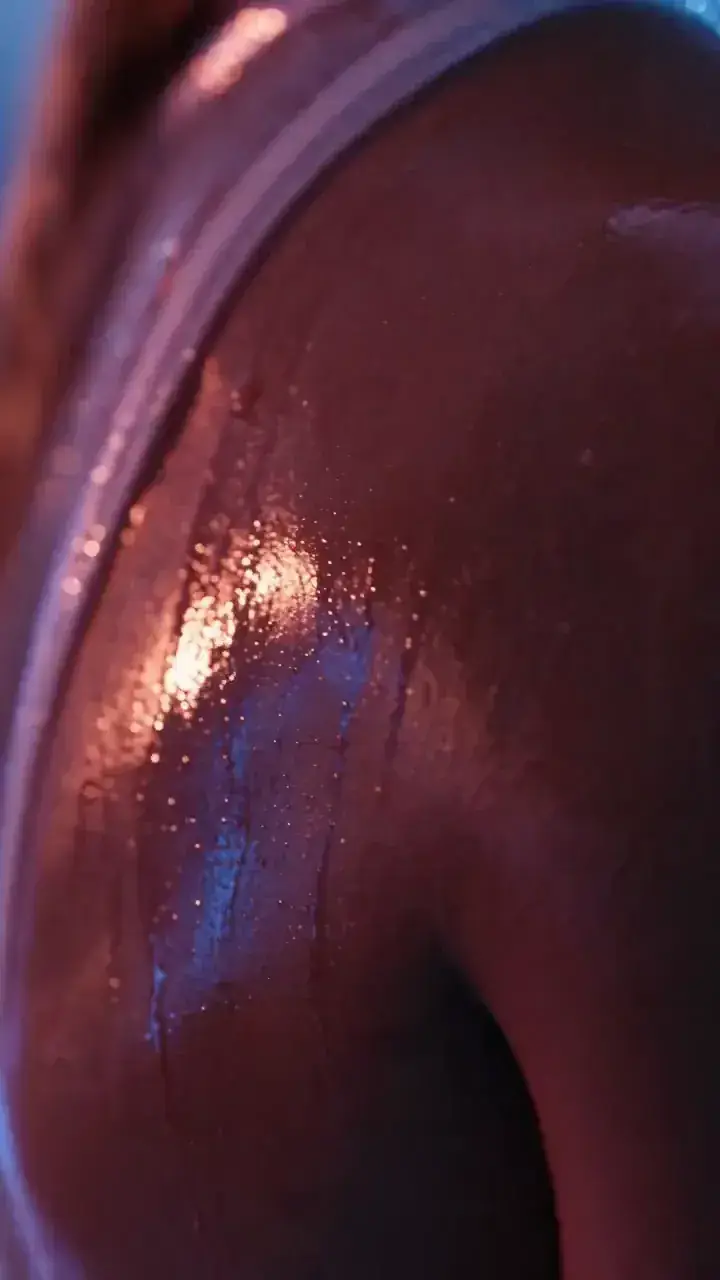
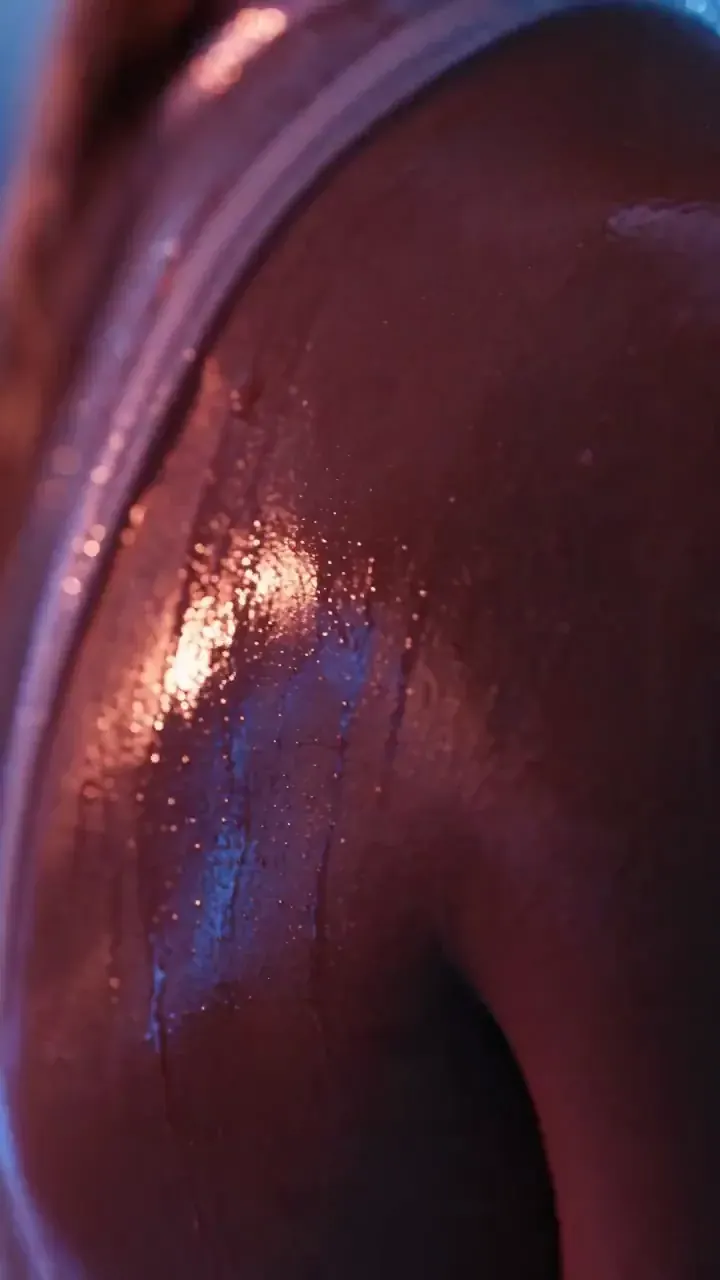
The material list in the macro block is a small piece of craft worth stealing. Glossy skin, sparkling fabric, rippling liquid, reflective chrome. Four surfaces, each with a completely different specular response, named in one clause. It gives the model licence to make four visually distinct macro shots without introducing a single new colour, which is precisely the problem a macro montage inside a locked palette has to solve.

The last sentence, "reference images are attached for style", is the only part of the prompt that is not self-contained, and it is a reminder about what a style reference is for. It is not a scene the video has to reproduce. It is a swatch: palette, lens character, finish. Supplying a style reference that contains a specific composition tends to produce eleven variations on that composition, which is not what a montage is.
Everything here runs in reference to video.

6 questions

Zero-g party — common questions

  • 01

    When should a prompt not use timecodes?

    When the shots average under about a second. At that density a precise schedule is met by truncating shots mid-motion, and letting the model distribute the time produces better cuts.

  • 02

    What holds a montage together if there is no story?

    Optics. One focal length, one grade, one depth of field, stated globally. The eye reads a change of lens character faster than a change of subject.

  • 03

    How many shots fit into ten seconds?

    Eleven works here because none of them has to be understood — they have to be felt. If any individual shot carries information, six is the ceiling.

  • 04

    What should a style reference image contain?

    Palette, lens character and finish. Not a composition — a style plate with a strong composition tends to produce variations on that composition instead of a montage.

  • 05

    Why state the colour grade twice?

    Once inside the opening scene description and once in the closing technical list, so it brackets every shot in between. Anything stated only in the middle of a long paragraph applies unevenly.

  • 06

    Can I put dialogue in a montage like this?

    Not at this density. Lip-sync competes for the same capacity as the shot count, and something has to give.

Copy it, change three things, run it.

Every character is on this page. 10s at 2K costs $1.30.

Sign in free · 3 clips a day