P—14 / ANIME DRAGON DUEL

Character consistency prompt for MiniMax H3

Six thousand characters, six cuts, two reference images — and a written rule for which one wins.

The longest prompt in this library by a wide margin, and the only one not written in English. It is here for one paragraph in the middle: the passage that states, explicitly, that when the two reference images disagree, image one owns the face and image two owns the costume. That single rule is the answer to the most common failure in multi-reference generation.

Steps
2 steps
Mode
Reference to Video
Duration
15s
Ratio
16:9
Resolution
2K
Audio
Foley only, no music
Cost
$1.95

Reference render — not generated on this site. Source: youmind

Output reference

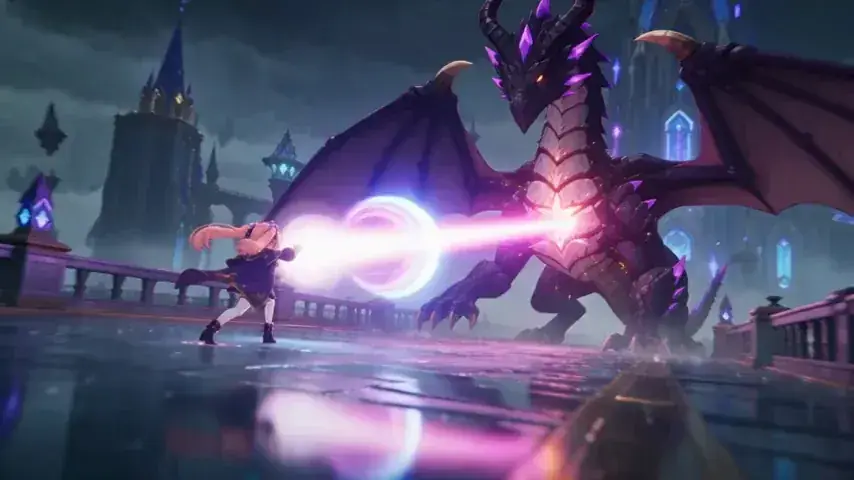
A pink-haired anime mage fires a beam into a black dragon over a rain-soaked magic cityVideo
The clip
6037 / 7000

Images 0/9 · Clips 0/3 · Audio 0/3 · 12 files max

No card, no account: watch and download 12 real MiniMax H3 clips, and run one prompt of your own on Agnes Video V2.0 — 16:9, watermarked, once. After that, sign in free for 3 clips a day on the free engine. MiniMax H3 on your own prompt starts at $24.9 a month.

1 FREE CLIP · WATERMARKED

02 — Inside

Two prompts, one workflow

Each step is the result beside the text that produced it. Copy either prompt into the console above.

Step 01the stillAny image model
1,767 chars

The two character plates

A face plate and a costume plate, generated separately. The video prompt then declares which one wins where they overlap.

TWO SEPARATE IMAGES. Generate each on its own; do not combine them.

IMAGE 1 — THE FACE PLATE
High-density anime cel-look character portrait, 1:1, plain white background.
Head and shoulders only, front three-quarter view. A young girl mage with a soft oval face, small chin, large violet-to-magenta eyes with multi-layered irises and a single white catchlight in each, fine delicate lash line, calm focused expression. Long coral-pink hair in twin tails, light fringe, a small lavender flower above each ear, a dark plum ribbon with gold fittings.
Rendering: fine coloured outlines rather than heavy black ink, clean two- to three-step cel shading with translucent mid-tones, layered highlights in the eyes and hair, clear skin tone with no muddiness.
Restrictions: white background only, no body below the shoulders, no props, no text, no borders, no sheet layout, no second character.

IMAGE 2 — THE COSTUME PLATE
High-density anime cel-look full-body character reference, 2:3, plain white background.
Full figure standing straight on, neutral A-pose, slight build and small stature. A navy-to-violet cloak with a gold border, a white frilled blouse, a dark plum corset, a layered violet pleated skirt, white over-the-knee socks, deep violet boots with gold clasps. At the waist: a belt, an amethyst crystal, a small potion vial, and a thick grimoire with gold corner fittings held closed at the left hip.
Rendering: same fine coloured outlines and two- to three-step cel shading as the face plate, differentiated material response for cloth, frill, leather, metal, crystal and glass.
Restrictions: white background only, neutral pose, face may be simplified or turned slightly away, no text, no borders, no sheet layout, no second character, no background scenery.

Paste it into whichever image model you already use. We do not run one here yet — when we do, this button generates instead.

Reference output, step 02

A pink-haired anime mage fires a beam into a black dragon over a rain-soaked magic cityVideo
The clip
Step 02the clipMiniMax H3 · Reference to video
6,037 chars

The duel

Verbatim, in the original Japanese. Six cuts, a character-lock clause, a style-lock clause, a sound schedule and a failure-prevention block.

高品質アニメ映像。高密度3Dトゥーン/セルルック。雨上がりの魔法都市を舞台にした映画的なハイファンタジー・アクション。ピンク髪の少女魔法使いが、巨大な黒竜の炎息を魔導書の防御陣で受け止め、その反力から瞬間移動で側面へ回り込み、右掌の多層収束ゲートから高出力ビームを撃ち込み、黒い灰と魔力粒子へ崩壊させる。

【キャラクター同一性固定と参照画像の役割】image1 は主人公の顔・同一人物性の最優先参照。柔らかな卵形の若い顔、小さな顎、青紫から紫桃色の大きな瞳、多層の虹彩と白いキャッチライト、繊細な目元、長いコーラルピンクのツインテール、軽い前髪、左右のラベンダー色の花、黒紫リボンと金装飾を全編で維持する。image2 は主人公の衣装・装飾・全身デザイン・装備の参照。細身で小柄な体格、濃紺から紫の金縁マント、白いフリルブラウス、黒紫のコルセット、紫の多層プリーツスカート、白いニーハイ、金具付き濃紫ブーツ、腰ベルト、アメジスト結晶、魔法薬、金装飾付き魔導書を維持する。参照が衝突した場合、顔、目、虹彩、前髪、髪色、髪飾りは image1、衣装、装飾、体格、装備、全身シルエットは image2 を優先する。2枚は外見資料だけであり、背景、構図、ポーズ、白背景、設定表の枠線、文字、分割レイアウトは動画へ持ち込まない。変えてよいのは集中した表情、目の向き、呼吸、戦闘姿勢、髪・マント・スカートの自然な動きだけ。顔の平均化、特徴混合、衣装交換、装備の増殖、分身、複製、追加人物を発生させない。

【画風固定:高密度3Dトゥーン/セルルック】この画風固定はキャラクター同一性固定を上書きしない。細く繊細な色付き輪郭線。顔、髪、衣装、装備へ明快な二段から三段のセルシェーディングと透明感のある中間影。瞳と髪に多層ハイライト。ピンク、ラベンダー、濃紺、紫、金を主人公の色軸にし、肌色を濁らせない。布、フリル、革、金属、アメジスト、濡れた石、ガラスを異なる反射と粗さで描き分ける。劇場版クラスのキーアニメーション、上質なコンポジット、透明感のある照明、密度の高い背景美術。魔法だけは高輝度のグラフィックアニメVFX、体積光、加算発光、屈折波、方向性モーションブラーを使う。太い黒輪郭、平坦な単層セル影、汎用的な3D美少女顔、滑らかなプラスチックCG、低密度背景、半写実、写実、くすんだ色、画風混合にしない。

【主人公の装備と状態遷移】魔導書は一冊だけ。金装飾付きの同じ装丁と厚みを全編で保つ。Cut 1でのみ左手で開き、Cut 2で閉じて左腰のホルダーへ戻し、以後は開かない。アメジスト結晶と魔法薬はベルトへ接続したまま保持する。攻撃はすべて右掌から出し、魔導書や魔法薬から発射しない。image2 にない携行物や二冊目の本を新たに出さない。

【黒竜の固定】敵は巨大な黒い四足翼竜一体のみ。主人公の約四倍の高さ。一つの頭、二本の角、青白く光る目は二つ、一つにつながった首と胴、脚は四本、各足の爪は三本。翼は左右一対、合計二枚。各翼は背中の付け根から連続する翼骨と翼膜で構成する。尻尾は一本で、腰の後方から根元、鱗、尾先まで枝分かれせず連続する。着弾点は胸中央の鱗ただ一点。余分な頭、角、脚、翼、尻尾を作らない。

【舞台】雨上がりの巨大な魔法都市。濡れた黒曜石と青灰色の石板の大通り、浅い水たまり、古い亀裂、魔導金属の欄干、崩れかけたアーチ橋。周囲には天へ伸びる魔法塔、尖塔、空中回廊、浮遊する小塔、巨大な水晶柱、魔力灯、発光する魔法水路、低い霧が幾層にも連なる。都市光はシアン、ロイヤルブルー、バイオレット、紫、少量のマゼンタ。背景光は主人公より一段暗くし、主人公のピンク、ラベンダー、紫、金の固有色を主役にする。文章として読める魔法文字は置かず、石床、水晶、建築表面には抽象的な幾何学紋様だけを淡く発光させる。

【空間と連続性】Cut 1から2は、主人公が画面左手前の前景、黒竜が画面右奥の中景。攻撃軸は右奥から左手前へ伸びる対角線にする。Cut 2の魔法陣通路を抜ける瞬間移動でのみ、意図的に一度だけ左右関係を入れ替える。Cut 3から6は、主人公が画面右手前、黒竜が画面左奥。右掌、収束ゲートの中心、ビーム、黒竜の胸中央を一直線に結ぶ。ここから先は左右関係を入れ替えない。隣り合うCutでは、カメラ高、主人公との距離、画面内の人物サイズ、背景の消失軸のうち二つ以上を必ず変える。カメラは接触点、力の向き、顔、空間関係のいずれかを見せるために動かし、人物自身の移動をカメラ移動で代用しない。全動作に自然な加速、減速、慣性、パララックスを持たせる。

Cut 1: 炎息と防御陣。黒竜は画面右奥。前脚を石床へ踏み込み、首を後方へ引き、胸が膨らみ、喉の内側が橙紫に灯る。主人公は画面左手前。左手で魔導書を開き、右掌を前へ突き出す。開いたページの上に、白い芯、シアンの外周光、紫桃色の縁を持つ三層の防御魔法陣が前後へ離れて展開し、異なる速度で逆回転する。黒竜が首を振り下ろすと同時に、橙紫の炎息が右奥から左手前へ、床の水たまりを蒸発させながら直進する。炎息の先端と防御陣の間には、まだはっきりした隙間があり、陣も主人公も無傷のまま保つ。炎息の先端が最前面の陣へ接触した瞬間だけ短いヒットストップを置く。接触後にだけ、三層の陣が奥から順に撓み、紋様が接触点から外側へ連鎖発光し、炎流が陣の左右へ裂けて後方へ流れる。反力は掌、手首、肘、肩、腰、後脚へ順に返り、後脚の靴底が濡れた石床を削って止まる。ツインテール、花飾り、マント、スカートが時間差で後方へなびく。カメラは低い位置から炎息の軸に沿って主人公の斜め後方へ寄り、防御陣、両手、横顔、竜の頭を同じ画面に残す。

Cut 2: 反力から瞬間移動。主人公は撓んだ最前面の陣を右掌で押し返し、その反力を腰の右回転へ流して次の動作へつなぐ。左手は魔導書を閉じ、左腰のホルダーへ戻す。閉じた同じ瞬間、押し返された陣が一枚の大きな円弧へ伸び、レンズ前を横切って画面を完全に覆う遮蔽ワイプになる。円弧が抜けると、主人公は黒竜の左側面、崩れたアーチ橋の上へ出現している。透明化ではなく、足裏の接地、膝の圧縮、腰の沈み、遅れて追いつくマントとツインテールで着地を読ませる。黒竜は炎息を吐き終えた姿勢のまま、首と両目を主人公の新しい位置へ回し始める。カメラは円弧の全面遮蔽の間に軸を変え、高い斜め後方から低い三分の四へ降りる。

Cut 3: 収束ゲート。主人公の胸上近距離。斜め前方から、顔の周囲を約十五度だけ緩く弧移動する。両脚を広げて膝を曲げ、後脚へ重心を残す。右掌を黒竜の胸へ向け、五本の指を自然に開く。左手は右手首の外側を支える。掌、手首、肘、肩の接続を読ませ、リングで腕全体を隠さない。右掌の前へ、白い発光芯、シアンの外周光、紫桃色の細い縁を持つ二層から四層の不完全な同心円ゲートが形成される。各リングは前後へ離れ、異なる速度で逆回転する。短い目盛り、放射線、青紫の電光が発射軸へ集まり、円は画面内へ収めず大きく見切れさせる。掌のアメジスト色の光が二度強く脈動し、二度目にリングが圧縮される。顔は暗い隙間へ残し、円弧で隠さない。表情はこの順で変わる。まず両目の虹彩が明るく絞られ、次に眉が中央へ寄り、続いてまぶたがわずかに細まり、そのあと口元が小さく引き結ばれ、最後に視線が黒竜の胸中央へまっすぐ固定される。鼻先、顎、胸、肩の向きも同じ胸中央へ向ける。

Cut 4: 長く持続する最大出力ビーム。低い後方三分の四ワイド。カメラは床すれすれの低い追従でビームと平行に前進し、手前の魔導欄干、雨粒、床の魔法紋様、水たまりの床反射、浮遊灯を異なる速度で流す。圧縮ゲートから、外周直径の三五から四五パーセントを占める太いビームを放つ。白から淡い桃白の高密度コア、厚いホットピンクとマゼンタの外殻、バイオレットの中間層、細いシアン白の縁、青紫の電弧。細い棒へ縮めない。最大出力へ達した後も、太さ、輝度、軸を落とさず連続保持する。ビーム内部を三つの圧縮波が発射口から胸中央まで順に走り、各波が通るたび外殻が膨張し、周囲の雨、霧、水滴を外側へ押し分ける。三つすべてが胸鱗へ到達するまでビームを切らない。第一波が届く直前まで、黒竜の胸鱗、翼膜、尻尾は無傷のまま保ち、亀裂も発光も崩れも先に出さない。第一波が胸中央の鱗へ接触したその瞬間にだけ、その一点がへこむ。接触後にだけ局所の火花と鱗の軋みが生じ、前爪が濡れた石床を削り、翼の付け根、翼膜、首、尻尾へ遅れて衝撃が伝わる。主人公は後脚を滑らせず反動に耐え、床の水たまりは発射方向へ連続して波立つ。床には白桃、マゼンタ、シアンの太い反射帯を残す。

Cut 5: ビーム停止と巨大な炎状魔力衝撃。三つ目の圧縮波が胸へ到達した同一フレームで、ビーム全長を発射口から着弾点まで完全に消す。細い残光を残さない。その同じフレームで胸中央に白熱核が発生し、局所的な半球状衝撃ドームが一度だけ膨張する。ドームは即座に裂け、白熱核から巨大な炎状オーラが上方と左右へ立体的に噴き上がる。オーラは内側のホットピンクとマゼンタ、中層のバイオレットと紫、外縁のロイヤルブルーとシアンを分離して残す。鋭い炎の先端、太い体積光の帯、透明な屈折波、細い電光、外向きの速度線を、前景・中景・後景の異なる深度と速度で展開する。炎の舌ごとに大きさ、角度、奥行き、立ち上がりを変える。直前まで直進していたビーム軸、放射状に伸びる炎の舌、円周に広がる衝撃輪、上方へ立ち上る乱流を、すべて胸中央の同じ着弾点へ統合し、一つの力として読ませる。純白は着弾核の周囲だけに限定し、白熱核の外側に色を残す。ホットピンク、マゼンタ、シアンの高彩度の色面が画面の大部分を占める状態を、一瞬の閃光で終わらせず複数フレーム保持してから減衰させる。全画面白飛びにしない。同じ瞬間に複数の対象が反応する。床の亀裂が着弾点から外側へ紫桃色に走り、水しぶきと蒸気が外向きへ噴き、黒い鱗片と石の破片が飛散し、主人公の髪が後方へ強くあおられ、周囲の柱が明滅し、カメラが押し戻される。カメラは衝突点へ斜めに短く突進し、衝撃波を受けた瞬間だけわずかに後退して、減衰する揺れで回復する。主人公は爆風の中でも動きを止めない。右掌を胸の高さへ保ったまま、衝撃を掌、手首、肘、肩、腰、後脚の順に受け流し、後脚の靴底が濡れた石床を短く削って踏みとどまり、その反力をそのまま次の構えへ渡して左手を身体の前へ戻す。直後、大小差、暗い空洞、内部の紫光、渦、上昇速度差を持つ灰紫の煙塊と黒い鱗片が前景へ重なり、黒竜の頭、胴、脚、翼、尻尾を完全に隠す。主人公だけは右手前のシルエットとして残る。このCutの終わりでは、主人公は右手前で低い構えを保ち、身体の向きを煙の中の黒竜へ向けたまま、その姿勢と位置を次のCutへ受け渡す。

Cut 6: 跪きから黒灰への崩壊と戦闘結果。カメラは煙の裂け目を前景にした主人公の右肩越しの中距離へ移り、右前景の主人公と左後景で崩壊する黒竜を同じ画面に保つ。主人公は前のCutの低い構え、右掌の高さ、身体の向きをそのまま引き継ぐ。風で煙の中央が裂けると、黒竜は胸の着弾点をこちらへ向けて跪いている。両前脚を折り、一方の前爪だけを床へつき、後脚を畳み、翼を半ば閉じ、尻尾を床へ伸ばし、頭を低く垂れる。立った姿や再攻撃姿勢へ戻さない。胸中央からアメジスト色とシアン白の魔力亀裂が鱗の継ぎ目に沿って全身へ走る。亀裂が肩へ届いた瞬間、跪いた上体が一度だけ前へよろめき、砕けた鱗の縁から短い火花が散る。亀裂に触れた黒い鱗の縁は炭化して薄い黒灰へほどけ、微細な紫、マゼンタ、シアンの魔力粒子へ変わる。翼端と尾先から始まり、翼膜、翼骨、尻尾、四肢、胴、首、頭へ連続して崩壊する。翼や尻尾を物理的に切断せず、接続した輪郭の外側から内側へ穴が広がるように粒子化する。黒灰は上昇渦へ巻き上がり、魔力粒子は短い螺旋を描いて光を失う。最後に胸の魔力核、二本の角、両目の青白い光が粒子へ砕け、肉体、影、床の反射まで完全に消える。死体を残さない。主人公は追撃へ移らず、その反力を右腕から腰へ流したまま構えを保つ。終端は戦闘結果の一枚絵。右前景の主人公は胸上から中景の大きさを保ち、顔、瞳、髪飾り、マントが読める距離に留まる。左後景には黒竜がいた空の濡れた大通り、消えかける黒灰と紫シアンの粒子だけが残る。主人公は警戒姿勢のまま右掌を数センチ下げ、呼吸とともにツインテールとマントが落ち着く。最後の一本の黒灰の渦がレンズ前を上昇し、その渦が画面上端を抜け切り、黒竜の影と床の反射がどこにも残っていない状態が読めた、そのフレームで切る。長い決めポーズや追加の顔アップへ移らない。

【音響】セリフ、歌声、BGMなし。音は必ず対応する接触や動作より先に鳴らさない。Cut 1は、黒竜の低い唸りと深い吸気、炎息の太い燃焼風音、炎息が陣へ接触した瞬間の魔力面の硬い共鳴、裂けた炎が左右へ流れる風音、主人公の短い呼気、靴底が濡れた石を削る摩擦音を順に同期する。Cut 2は、魔導書を閉じる乾いた革と紙の音、陣が円弧へ伸びる高い魔力共鳴、瞬間移動の短い空間音、着地の靴底接地音と布の擦れ。Cut 3は、リングの高い魔力共鳴と低い収束音、掌の脈動音。Cut 4は、圧縮魔力の太い連続轟音を持続させ、三つの圧縮波が胸鱗へ接触するたびに硬い鱗の擦過音と低周波の魔力衝撃音を同期する。前爪が石床を削る摩擦音も重ねる。Cut 5は、魔力ドームが裂ける圧縮魔力場の破裂共鳴、濡れた石の亀裂音、外向きの風圧、水音、石片と黒い鱗片の衝突音を接触の瞬間へ同期し、主人公の短い呼気を発射保持の終わりへ置く。Cut 6は、乾いた鱗が灰へほどける細かな擦過音、黒灰の風擦れ、魔力粒子の高い結晶音を各部位の消失へ同期する。最後の核が消える瞬間に低音を止め、粒子の高音と主人公の静かな呼気だけを短く残す。

【重大な破綻防止】文字、字幕、ロゴ、透かし、設定表UIなし。追加人物、二人目の魔法使い、分身なし。ビームの短時間化、細線化、点滅、途中減衰、早すぎる爆発、ビームと爆発の長い同時表示、消え残るレーザーなし。左右対称で平面的な花形爆発、同じ大きさの丸煙、パステル化なし。全画面白飛びにしない。黒竜を煙の手前へ合成しない。煙が消える前に竜を見せない。竜の立ち直り、瞬間消失、透明化、死体残留、切断された翼や尻尾、複数の尻尾なし。主人公の顔を平均顔や無表情の面にしない。頭上の輪、顔の表面に吸着する光点、顔を横切る太い枠線なし。

4 levers

Make it yours

What is safe to change. Most libraries publish only this list, which is why so many copied prompts come back worse than the original.

  1. 01

    The conflict rule

    One sentence decides everything: face, eyes, irises, fringe, hair colour and hair ornaments follow image one; costume, accessories, build, equipment and full-body silhouette follow image two. Rewrite that split for your own two references and the rest of the prompt transfers.

  2. 02

    The prop state machine

    The grimoire is opened in cut one, closed and holstered in cut two, and never opened again. Naming when a prop changes state is the only way to stop it appearing and disappearing between cuts.

  3. 03

    The screen-direction flip

    Hero left and dragon right for two cuts, then one deliberate flip during a full-frame wipe, then hero right and dragon left for four. One flip, announced, hidden inside a transition that covers the whole frame.

  4. 04

    The anatomy census

    One head, two horns, two eyes, four legs, two wings, one tail. Counting the parts of a creature is unglamorous and it is the difference between a dragon and a dragon with three tails.

Three ways to break it

  • Supplying reference sheets with borders, labels or panels

    The prompt says explicitly that the two images are appearance material only and that white backgrounds, sheet borders, text and split layouts must not enter the video. Model sheets are the natural thing to reach for and the frames around them leak into the output as literal on-screen furniture.

  • Leaving the conflict rule out

    Two references that both contain a person will be averaged. You get a face that is neither of them, which is the standard multi-reference failure and the reason most people give up on it.

  • Letting the beam and the explosion overlap

    The prompt insists the beam is deleted in its entirety on the same frame the impact core appears, with no residual glow. Without that instruction the model cross-fades, and a beam still firing into an explosion it already caused reads as broken physics to every viewer, including ones who could not say why.

What it does

What the anime dragon duel template does

This prompt runs to a little over six thousand characters — twice the length of the next longest in this library — and it is the only one here not written in English. Both facts are the reason it is on its own page.

The paragraph worth the whole page is the third one. Translated: when the references conflict, the face, eyes, irises, fringe, hair colour and hair ornaments come from image one, while the costume, accessories, build, equipment and full-body silhouette come from image two. That is a written precedence order, and almost nobody writes one.

The failure it prevents is the standard multi-reference failure. Hand a model two images that each contain a person and ask it to keep the character consistent, and it does the reasonable thing: it averages them. You get a face that is a blend of two faces, and because the blend is smooth it looks intentional rather than broken, so people conclude that multi-reference generation does not work rather than that their prompt was ambiguous. Declaring precedence turns an averaging problem into a lookup.

The same paragraph does a second, less obvious job. It states that the reference images are appearance material only, and that their white backgrounds, sheet borders, text and split layouts must not enter the video. Anyone preparing character references reaches for a model sheet, and a model sheet is a composite with panels and labels. Without an explicit exclusion those panels arrive in the output as literal furniture in the frame — a line down the middle of a fantasy city, a caption over a dragon.

Then it names what is allowed to vary: expression, eye direction, breathing, combat stance, and the natural movement of hair, cloak and skirt. Everything else is frozen. Enumerating the permitted variation is more precise than forbidding change, because a prompt that only says "keep the character consistent" gives the model no way to animate her.

Beyond the character lock, three techniques generalise. The prop state machine: the grimoire opens in cut one, closes in cut two and stays closed, which is how you stop an object flickering between states across cuts. The screen-direction rule: the hero and the dragon swap sides exactly once, during a wipe that covers the entire frame, which is the only place a flip can hide. And the anatomy census: one head, two horns, four legs, two wings, one tail — counting a creature's parts is the cheapest defence against the extra limb.

The audio block is worth reading even if you never generate this shot. It is a sound schedule with one governing rule stated first: no sound may play before the contact or action it belongs to. H3 writes picture and audio together, so an audio schedule is also a picture schedule, and forbidding anticipatory sound is a way of forbidding anticipatory motion.

Finally, note the failure-prevention block at the end — roughly four hundred characters of nothing but banned outcomes, all of them specific. No thin beam, no flickering beam, no early explosion, no leftover laser, no symmetrical flower-shaped blast, no full-frame white-out, no corpse. Every one of those is a real thing an anime action generation does wrong, and the list reads like it was written after watching the model do each of them.

On length: the character count on the rule above the prompt is computed from the text, so you can check it. It leaves roughly a thousand characters before the seven-thousand ceiling the API enforces, which is less headroom than it sounds like — one more cut, written to the standard of the six already here, would use all of it.

Everything here runs in reference to video.

6 questions

Anime dragon duel — common questions

  • 01

    How do I stop two reference images being averaged together?

    Write a precedence rule. State which image owns the face and which owns the costume, feature by feature. Without one the model blends them and you get a person who is in neither reference.

  • 02

    Can I use a character model sheet as a reference?

    Only if you also forbid its furniture. Sheet borders, labels, split panels and white backgrounds all leak into the video as on-screen elements unless the prompt excludes them explicitly.

  • 03

    Does MiniMax H3 accept prompts in Japanese?

    Yes — this one is verbatim Japanese and it is the longest prompt in this library. Language is not the constraint; the roughly seven-thousand-character ceiling is.

  • 04

    How do I keep a prop from appearing and disappearing between cuts?

    Give it a state machine. Say when it opens, when it closes, where it goes afterwards, and that it does not change again.

  • 05

    How many times can I flip screen direction in fifteen seconds?

    Once, and only behind something that covers the whole frame. This prompt uses a wipe. An unannounced flip reads as a continuity error.

  • 06

    Why list every body part of the dragon?

    Because extra limbs, extra tails and extra heads are among the most common creature failures. A census — one head, two horns, four legs, two wings, one tail — costs twenty characters and removes most of them.

Copy it, change three things, run it.

Every character is on this page. 15s at 2K costs $1.95.

Sign in free · 3 clips a day