
P—13 / UGC PROBLEM TO SOLUTION

Product demo prompt for MiniMax H3

Too hot. Buys fan. Feels better. The oldest advertising structure there is, in fifteen seconds.

A creator complains about the heat, produces a small fan, turns it on, and is visibly relieved. That is the whole film. It earns its place here because of one instruction repeated throughout: the person and the product stay in the same frame from the moment the product appears — which is the single most-broken rule in product UGC.

Steps
2 steps
Mode
Image to Video
Duration
15s
Ratio
9:16
Resolution
2K
Audio
Dialogue + street ambience
Cost
$1.95

Reference render — not generated on this site. Source: pollo.ai

Output reference

A creator on brownstone steps in a polka-dot halter topImage
Step 01 — the still
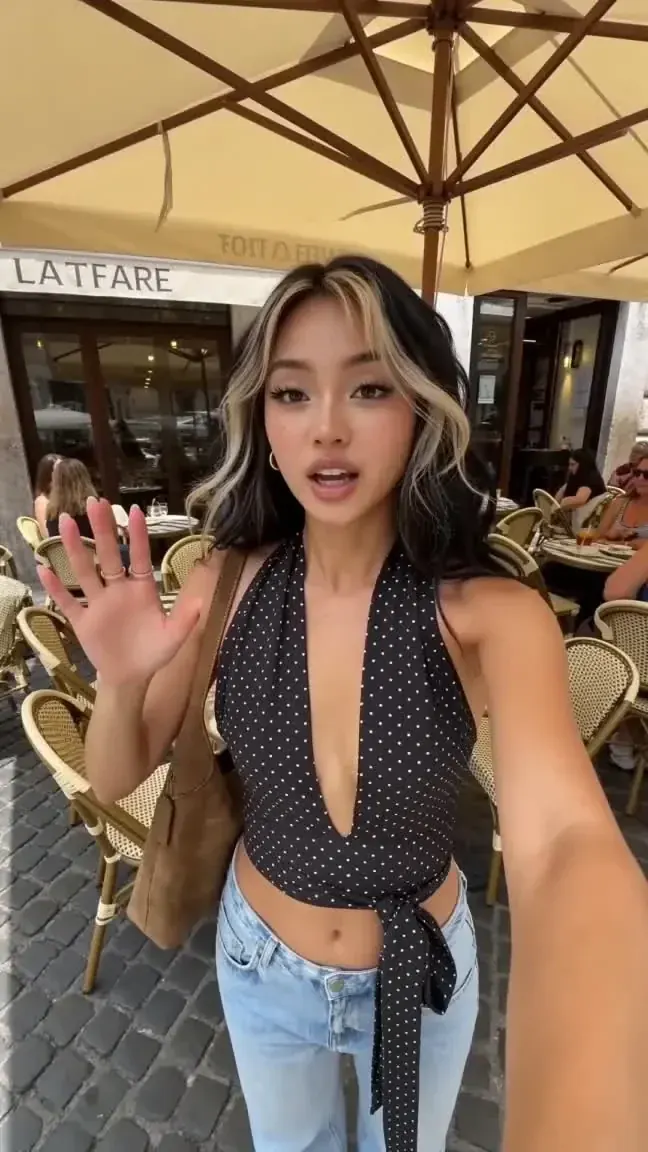
A creator sits at a cafe table on a sunny street with a peach mini fanVideo
Step 02 — the clip

JPG · PNG · WebP · HEIC · 30 MB

2632 / 7000

Images 0/9 · Clips 0/3 · Audio 0/3 · 12 files max

No card, no account: watch and download 12 real MiniMax H3 clips, and run one prompt of your own on Agnes Video V2.0 — 16:9, watermarked, once. After that, sign in free for 3 clips a day on the free engine. MiniMax H3 on your own prompt starts at $24.9 a month.

1 FREE CLIP · WATERMARKED

02 — Inside

Two prompts, one workflow

Each step is the result beside the text that produced it. Copy either prompt into the console above.

Reference output, step 01
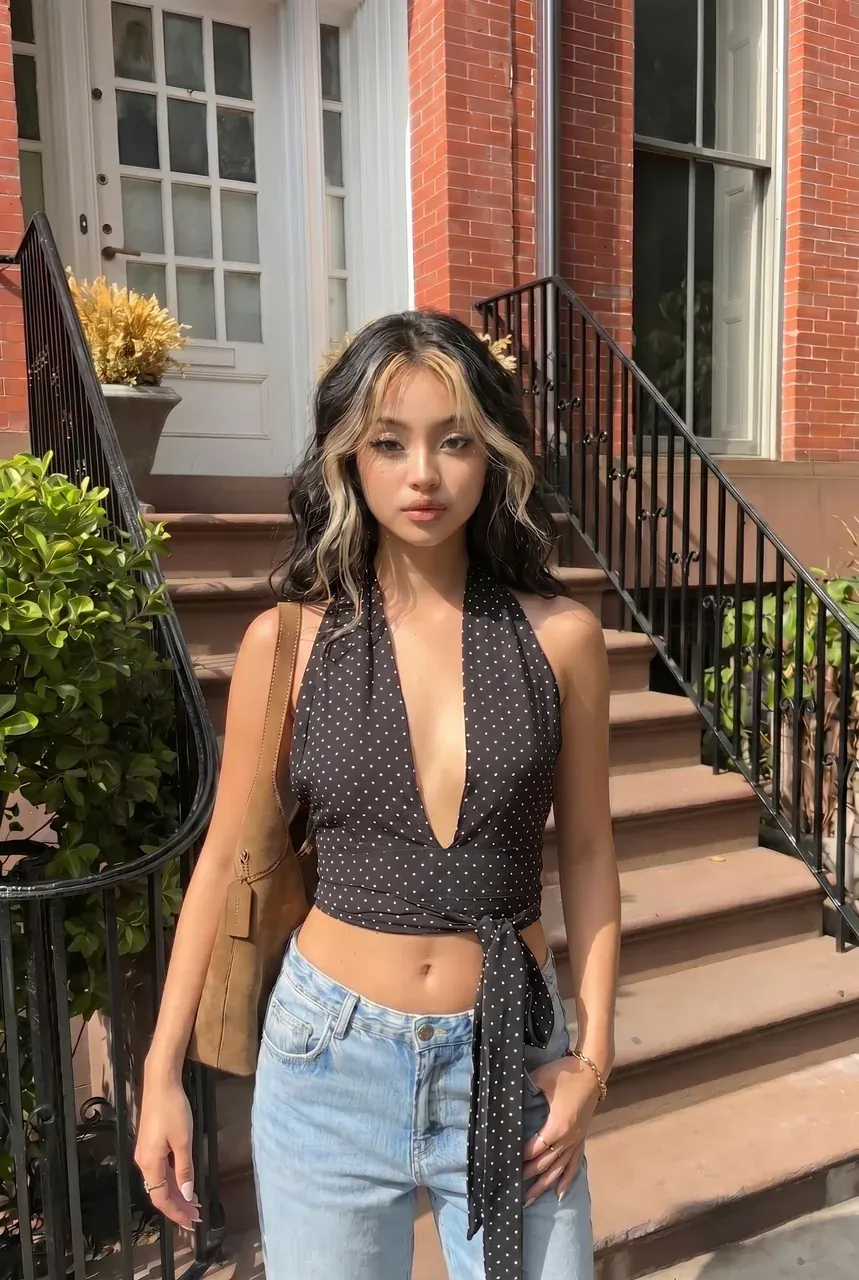
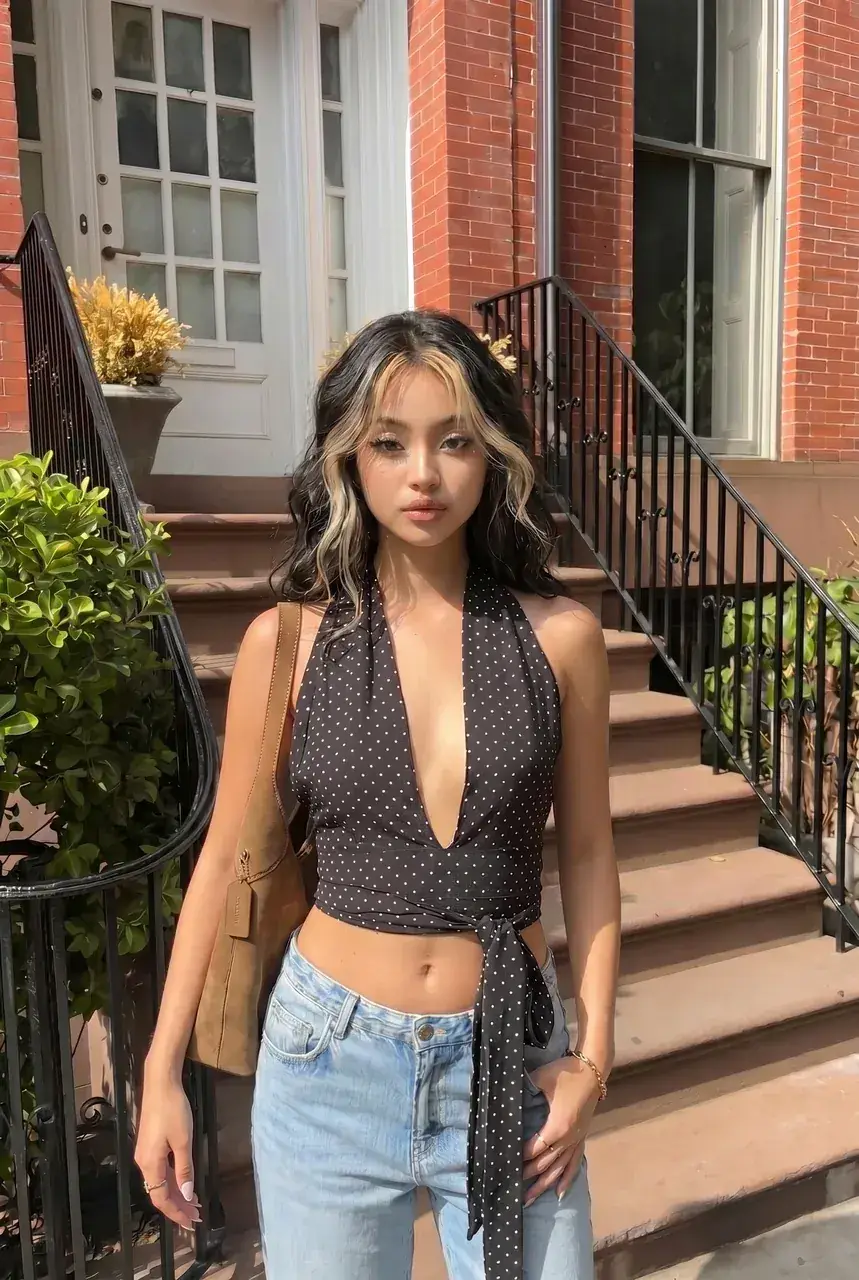
A creator on brownstone steps in a polka-dot halter topImage
The still
Step 01the stillAny image model
1,983 chars

The creator and the product

Two frames, generated separately: the person and the product. The video pass needs both, and they must not be composited together first.

TWO SEPARATE IMAGES. Generate each on its own; do not combine them.

IMAGE 1 — THE CREATOR
Photoreal candid street-style portrait, vertical 2:3, bright natural daylight.
Subject: a stylish young woman in her twenties, mid-thigh up, standing straight on to camera with a relaxed, slightly amused expression. Long black wavy hair falling past her shoulders with distinct blonde face-framing highlights at the front. Soft glam makeup, defined lashes, glossy neutral lip.
Wardrobe: a black halter wrap top in a small white polka-dot print, deep V neckline, tied at the waist with the tails hanging loose. Light-wash low-rise straight jeans. A tan suede shoulder bag on one shoulder. Delicate gold rings and a thin gold bracelet.
Set and light: the front steps of a red-brick townhouse, black iron railings, stone stoop, low green planting. Warm direct afternoon sun, real contrast, natural shadow on the steps.
Render: photoreal, real skin texture, natural hair strands, sharp on the face.
Restrictions: no text, no logo, no watermark, no second person, no filter smoothing.

IMAGE 2 — THE PRODUCT
Photoreal studio product photograph, vertical 2:3, soft gradient background.
Product: a compact handheld mini fan in matte pastel peach, shown in three-quarter profile. A rounded cylindrical fan head with rose-gold metallic radial blades behind a wide circular opening, a polished rose-gold domed centre cap, thin vertical vent slits along the rear of the head, an adjustable neck joint below the head, a slim vertical handle with one small oval button on the side, and a matching curved charging dock the handle rests into, on a small round white base.
Set and light: warm peach-to-blush gradient background, soft key from upper left, gentle contact shadow, no hard specular.
Render: photoreal product render, clean matte plastic finish, accurate metal reflection on the blades, sharp throughout.
Restrictions: no hands, no text, no logo, no brand marks, no watermark, no cluttered props.
Paste it into whichever image model you already use. We do not run one here yet — when we do, this button generates instead.

Reference output, step 02

A creator sits at a cafe table on a sunny street with a peach mini fanVideo
The clip
Step 02the clipMiniMax H3 · Image to video
2,632 chars

The demo

Five beats, each pairing an action with a line, and each one restating that both the face and the product stay in frame.

Create a product video ad from [image1], [image2].

Authentic UGC problem-to-solution ad, 15 seconds, vertical 9:16, shot on a phone with natural handheld micro-shake, bright summer European street atmosphere, photorealistic 4K, no text overlays.

Use the woman from the reference image as the creator: stylish young woman with long black wavy hair and blonde face-framing highlights, soft glam makeup, black polka-dot halter wrap top, light-wash low-rise jeans, tan shoulder bag, delicate rings and bracelet, confident summer street-style energy.

She is walking through a charming European old-town street in peak summer: warm stone buildings, small cafe terraces, striped awnings, cobblestone sidewalk, flower boxes, outdoor tables, tourists passing in the background, bright afternoon sun, heat shimmer, golden natural light. Keep the woman and the mini fan together in every shot once the product appears.

Hero product: compact pastel-peach mini desk fan matching the product reference — rounded cylindrical fan head, soft peach outer shell, rose-gold metallic radial blades, glossy rounded centre cap, rear vent slits, slim vertical handle, small oval side button, adjustable neck joint, and matching curved charging dock.

Action and dialogue sequence:
She stands near an outdoor cafe table, fanning herself with her hand, slightly flushed from the heat, and says: "It is way too hot to be walking around this city right now."

She sits at the cafe table and pulls the pastel-peach mini fan from her tan shoulder bag, placing it into the matching dock beside her iced drink so both her face and the fan stay in frame: "This is exactly why I brought this little fan."

Close-up: she presses the oval side button. The rose-gold blades spin with soft motion blur inside the rounded head, sending air toward her face. Her hair moves gently and she relaxes immediately: "Okay, that actually feels so good."

She lifts the fan out of the dock and holds it in one hand while still sitting outside, angling it toward her face and neck. The camera stays close enough to show the peach body, spinning blades, rear vents and slim handle: "It is tiny, cute, and strong enough for this kind of summer heat."

Final shot: she walks slowly down the sunny cobblestone street holding the fan near her face, smiling with relief, the product clearly visible beside her outfit. She says: "European summer saved. This is staying in my bag."

Style: authentic influencer UGC, problem-solution storytelling, person and product together in frame, warm street ambience, soft fan sound, casual conversational English voiceover, no logo, no watermark.

4 levers

Make it yours

What is safe to change. Most libraries publish only this list, which is why so many copied prompts come back worse than the original.

  1. 01

    The problem

    Heat, named in the first line and reinforced by "heat shimmer" in the set description. The problem has to be visible in the picture as well as stated in the dialogue, or the product has nothing to solve.

  2. 02

    The reveal

    The product comes out of the bag she was already carrying in the reference photo. Continuity like that is cheap to write and it is most of why UGC reads as real rather than as a placement.

  3. 03

    The proof shot

    Blades spinning, hair moving. The hair is the proof — a fan that spins is a prop, a fan that moves hair is working. Every product demo needs one shot where the effect is visible on something other than the product.

  4. 04

    The closing line

    "This is staying in my bag" is a purchase decision spoken out loud. It is the only sentence in the script doing sales work, and it is nine words at the very end.

Three ways to break it

  • Cutting to the product alone

    The prompt says "keep the woman and the mini fan together in every shot once the product appears", and then repeats the requirement inside individual beats. A clean product shot with no person in it is a commercial, and the moment one appears the viewer reclassifies the whole video as an ad.

  • Compositing the two references into one image first

    The step-one prompt generates the person and the product as separate frames on purpose. Handing the model a pre-composited image locks the product to one position and scale, and the video pass then cannot pick it up, dock it, or hold it near her face.

  • Describing the product only once

    The product spec appears in the header and again inside two of the beats, at different levels of detail. Over fifteen seconds and five handling shots, a product described once drifts — the blade colour goes first, then the handle shape.

What it does

What the ugc problem to solution template does

This is the most commercially boring template in the library and probably the most useful. Problem, product, proof, benefit, decision — five beats that have been the shape of direct-response advertising for a century. What is worth studying is the one line preventing the model from breaking it.

"Keep the woman and the mini fan together in every shot once the product appears." That instruction sits at the end of the set description, before any beat is written, and it is then re-stated inside two of the five beats — "so both her face and the fan stay in frame", "the camera stays close enough to show the peach body, spinning blades, rear vents and slim handle".

The reason it needs saying three times is that a video model asked to show a product will show the product. Cleanly, centred, well lit, with nothing else in frame. That is what product photography looks like in any training set, and it is exactly wrong here — the instant a shot appears with no person in it, the viewer reclassifies the video from a recommendation to an advertisement, and the format's entire persuasive advantage is gone. Keeping the person in frame is not a composition preference, it is the format.

The two reference images being separate is the second structural decision, and it is worth understanding before you prepare your own. It is tempting to composite the creator holding the product into one hero frame and hand that over. Do not. A pre-composited reference fixes the product's position, scale and orientation relative to the person, and this script needs the fan to be in a bag, then in a dock, then in her hand, then near her face. Two independent references let the model place the object; one combined reference tells it the object belongs exactly where it already is.

The proof shot deserves attention because most product demos get it wrong. Beat three is a close-up of the blades spinning — and then, crucially, "her hair moves gently". A spinning fan is a mechanism. Hair moving in the airflow is evidence. Every product demo needs one shot where the effect is visible on something that is not the product, and it is almost always the shot people forget to write.

The dialogue is doing less work than it appears to. Four of the five lines are observational — too hot, that's why I brought this, that feels good, it's tiny and strong. Only the last one, "this is staying in my bag", makes a claim, and it makes it as a personal decision rather than as a recommendation. Nine words at the very end is the entire sales content of a fifteen-second advertisement, which is roughly the correct ratio.

Word budget applies here exactly as it does to every dialogue prompt on this site: five lines, none over fourteen words, three seconds each. The lines were written to the clock, and it shows in how conversational they are.

Everything here runs in image to video.

6 questions

UGC problem to solution — common questions

  • 01

    Why must the person and the product stay in the same frame?

    Because a clean product-only shot reclassifies the whole video as an advertisement in the viewer's head, and the persuasive advantage of UGC is that it is not one.

  • 02

    Should I composite my two reference images into one?

    No. Separate references let the model move the product between the bag, the dock and her hand. A combined reference fixes the product in one place relative to the person.

  • 03

    How many times should I describe the product?

    At least twice — once in the header and once in the beat where it is handled most closely. Over five shots a product described once drifts, usually starting with colour.

  • 04

    What makes a product demo convincing?

    One shot where the effect is visible on something other than the product. Here it is hair moving in the airflow; without it a spinning fan is just a mechanism.

  • 05

    How much of the script should be selling?

    In this one, nine words out of about sixty, at the very end, spoken as a personal decision. The other four lines are observations.

  • 06

    Does this work for products that are not handheld?

    The structure does. What has to change is the proof shot — you need something in frame that visibly reacts to the product working.

Copy it, change three things, run it.

Every character is on this page. 15s at 2K costs $1.95.

Sign in free · 3 clips a day