P—01 / ANIME FACTORY FIGHT

Anime fight scene prompt for MiniMax H3

Thirty-nine words. Two rivals, one dead factory, and a camera that takes every hit.

The shortest prompt in this library and the most violent thing in it. It spends almost every word on physics — what sparks, what shatters, what the camera does when a body lands — and almost none on describing who is fighting. H3 will fill in character design from the genre on its own. It will not fill in a camera that reacts.

Steps
One shot
Mode
Text to Video
Duration
8s
Ratio
16:9
Resolution
2K
Audio
Impact foley + room tone
Cost
$1.04

Reference render — not generated on this site. Source: clipdance.ai

Output reference

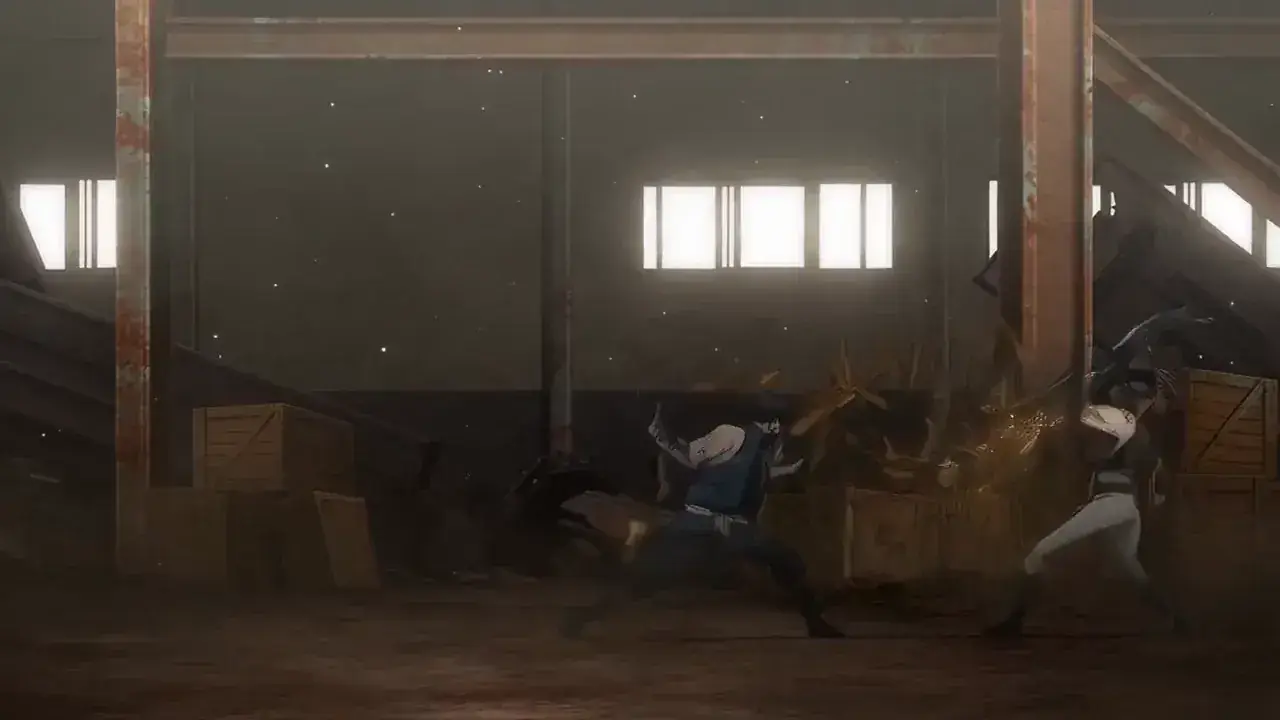
Two anime fighters clash in an abandoned factory as sparks and crates scatterVideo
The clip
213 / 7000

Images 0/9 · Clips 0/3 · Audio 0/3 · 12 files max

Sign in free · 3 clips a day

No card, no account: watch and download 12 real MiniMax H3 clips, and run one prompt of your own on Agnes Video V2.0 — 16:9, watermarked, once. After that, sign in free for 3 clips a day on the free engine. MiniMax H3 on your own prompt starts at $24.9 a month.

1 FREE CLIP · WATERMARKED

01 — Inside

One prompt, one workflow

The clip beside the verbatim source. Copy it into the console above, change what you need, generate.

Reference output

Two anime fighters clash in an abandoned factory as sparks and crates scatterVideo
The clip
The promptthe clipMiniMax H3 · Text to video
213 chars

The fight

One sentence in three clauses: who is fighting, how the camera behaves, and what the room does about it.

Anime-style combat sequence: two rivals fight in an abandoned factory — the camera bounces with each impact, handheld-style — steel sparks, crates shatter, and their final clash sends a shockwave through the walls

4 levers

Make it yours

What is safe to change. Most libraries publish only this list, which is why so many copied prompts come back worse than the original.

  1. 01

    The room

    Abandoned factory is doing two jobs at once: it licenses the sparks, and it gives the shockwave something to travel through. Any swap has to keep both — a subway platform, a dry dock, a parking structure. A field or a rooftop takes the walls away, and the last beat then has nothing to hit.

  2. 02

    The camera verb

    The clause "the camera bounces with each impact, handheld-style" is the entire shot. Replace it with "the camera whip-pans to follow each exchange" or "locked-off wide, the fighters cross frame" and the same fight becomes a different film.

  3. 03

    The debris list

    "Steel sparks, crates shatter" is a materials list, not a description. Change the materials and the palette moves with them: "glass shelves burst, paper storms upward" reads white and weightless where steel reads orange and heavy.

  4. 04

    The sound half

    The source prompt says nothing about audio, so H3 invents it. Append "— impact foley locked to each hit, low room tone beneath, no music" and you get a mix instead of a guess. This is the one addition worth making to every prompt on this page.

Three ways to break it

  • Naming a specific anime or studio

    You get a weak imitation of one show instead of the genre's motion language, and you have written a prompt whose output you cannot safely ship.

  • Adding a third fighter

    The handheld bounce is cut to a two-body exchange. A third body forces the camera to choose who to follow, and inside eight seconds it chooses wrong about half the time.

  • Writing the hits out in order

    The prompt works because it names a rhythm and lets the model choreograph inside it. "First a punch, then a kick, then a throw" spends the budget on a shot list the model has to compress, and the final clash — the only beat that matters — lands at second seven with nothing behind it.

What it does

What the anime factory fight template does

Almost every other template on this page is several hundred words long. This one is thirty-nine, and it holds its own against them, which is worth understanding before you write anything of your own.

What it spends its words on is physics. Sparks, shattering crates, a shockwave through walls — none of those describe a person, and all of them describe force. A video model has no trouble imagining two anime fighters; it has a great deal of trouble deciding how hard they are hitting each other. Naming the debris is the cheapest way to set that dial, because debris is a consequence and the model has to work backwards from it to the impact that caused it.

The camera clause is the second half of the same trick. "The camera bounces with each impact, handheld-style" is not a style note. It ties camera motion to an event in the scene, which means the model has to decide when the impacts are before it can decide when the camera moves. That single dependency is what makes the shot feel cut rather than generated: the picture has an internal clock, and it is the fight.

The ending is written as a single escalation — "their final clash sends a shockwave through the walls" — and it is doing something specific. Eight seconds of continuous fighting has no shape. One clash that is bigger than the others gives the clip a last frame worth arriving at, and it tells the model where in the eight seconds to put its most expensive motion.

What the prompt leaves out is as deliberate as what it includes. There is no hair colour, no wardrobe, no lighting direction, no lens. Every one of those would have been a constraint the model had to satisfy at the cost of the motion, and the motion is the only thing anyone will remember about a two-second-per-beat fight. If you want a specific look, that is a job for a reference image and a different template, not for more adjectives in this one.

One honest weakness: the source prompt describes no sound at all. H3 generates audio whether or not you ask, so leaving it unwritten means accepting whatever it invents. The sound lever above is the fix, and it costs you sixteen words.
Everything here runs in text to video.

6 questions

Anime factory fight — common questions

  • 01

    How long should this prompt run?

    Eight seconds. The prompt describes one exchange and one final clash, which is about two beats of action; stretched to fifteen the model pads it with circling and the shockwave arrives late.

  • 02

    Why is there no description of the two fighters?

    Because the genre supplies it. "Anime-style combat sequence" is enough for H3 to produce plausible character design, and every word you spend on hair and wardrobe is a word not spent on how hard they hit.

  • 03

    Can I make it look like a specific series?

    You can ask, and the result is usually a diluted imitation rather than a match. If you need a particular look, lock it with a reference image and use a reference-to-video template instead.

  • 04

    Does H3 add sound to this by itself?

    Yes. H3 generates picture and audio in the same pass, so you get a soundtrack whether or not the prompt asked for one. Adding an explicit audio clause is how you stop guessing what that soundtrack will be.

  • 05

    Will the same prompt give me the same fight twice?

    No. H3 exposes no seed parameter, so every run is a different take. Treat the clip on this page as one draw from the distribution, not as a promise.

  • 06

    Does the prompt need an aspect ratio written into it?

    No — ratio, duration and resolution are settings, not prompt text. This one was shot 16:9; the same words work vertically, though the shockwave has less wall to travel across.

Copy it, change three things, run it.

Every character is on this page. 8s at 2K costs $1.04.

Generate free